Thrifted Eras
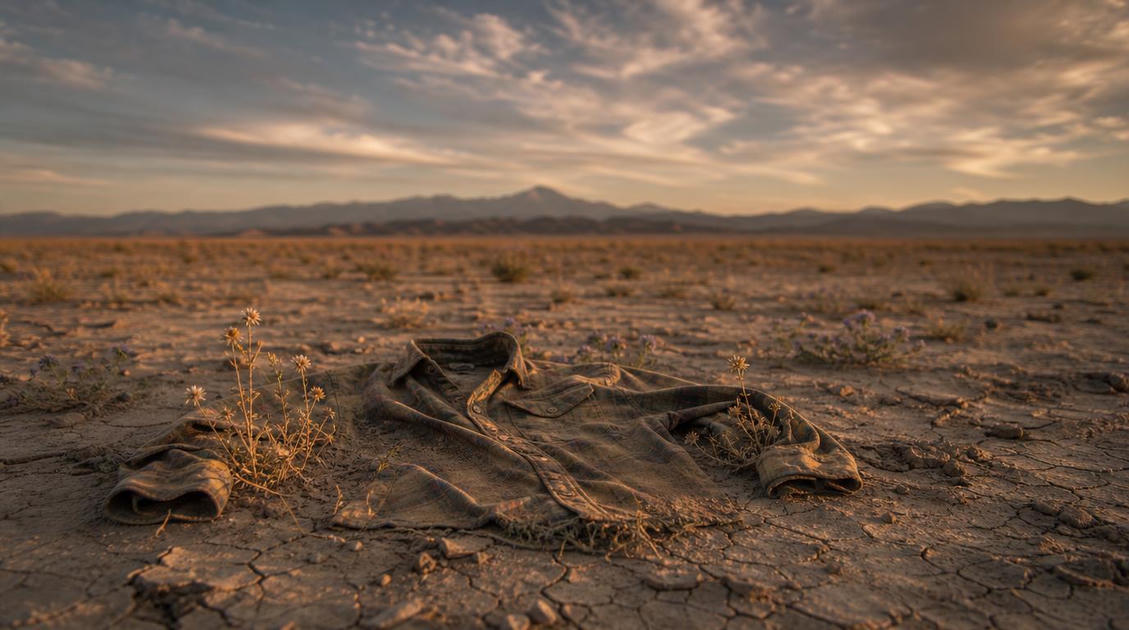
I was walking somewhere recently, I can't even remember where, and I saw a kid in a Nirvana smiley-face tee. Late teens, early twenties, AirPods in, scrolling on his phone. The shirt looked deliberately worn. Bought new, styled vintage.
It didn't land wrong exactly. I'm not interested in the cheap read where the kid is a hypocrite. He liked the shirt. He liked the band, maybe. That's fine. What stopped me was a smaller question, almost accounting in nature: who is making money off that shirt? Because he didn't buy it at a show. There was no show. There's no Kurt to tour. So someone, somewhere, owns the rights to put that yellow smile on cotton and ship it to a mall in Tulsa.
I looked it up later. It's Nirvana, LLC. Courtney Love, the surviving members, the Cobain estate. They license the name and the smiley face. They've sued Marc Jacobs over it. The shirts move through Target, H&M, Urban Outfitters, the whole apparatus the band's entire posture was constructed against.
I want to be careful here. I'm not interested in pretending I was inside that scene in some pure way. I was born in 1982, on the cusp between Gen X and millennial, and the grunge moment proper happened when I was eleven. I was in the Midwest, in the Bible Belt, a nerd kid doing Dungeons and Dragons before that was cool, watching anime on bootleg tapes. My consumption of that whole cultural moment was already filtered through distance and through television. By the time it really shaped me, it had migrated into the early goth and emo thing my drama-kid friends and I all wore as a uniform, and even that was downstream of something already on its way to being packaged.
But I was inside something. I wore the flannel. I was cold at the bus stop in it. I bought tapes at a record store. I won a Blind Melon cassette as a prize in a school fundraiser, of all things, and listened to it on a Walkman with the foam headphones. There was a radio station in Tulsa called The Edge that took itself seriously, and back then it kind of was. (They still exist. They play the same songs. I joke they should rename themselves The Middle.) The point isn't that I have credentials. The point is I was alive inside a cultural moment that had an inside.
Refusal as a Product Line
The thing Cobain was supposedly about, or at least the thing the surface of the music kept gesturing at, was a refusal. A suspicion of the corporate machine that had eaten the seventies and eighties and was eyeing the nineties hungrily. You can hear it in the interviews and read it in the feuds. There's a reason Layne Staley and Cobain were prickly about who was packaging what. They saw their own art being inverted in real time and tried, badly and humanly, to resist.
What seventeen-year-old me would have said about Nirvana, LLC licensing the smiley face to Target is easy to imagine. I would have been incredulous and disappointed. We were earnest then, in 1999, in that one strange decade between the Cold War and 9/11, when there was actually a little oxygen in the room and we thought we might be walking into the Jetsons. What I would say back to that kid now is: buckle up. You don't know.
But the more interesting move isn't the disappointment. It's the doubling. The corporation takes the refusal, strips out whatever body was inside it, and puts the empty form on the rack. Then it sells the empty form back to the kid, and the kid pays to wear it too. Two layers of wearing. Two layers between the shirt and any body that was ever cold in one. And at no point in that transaction does any party register a contradiction, because the position from which one would register it no longer exists.
The Signifier Was Never Solid
The easy version of this complaint has been written a hundred times. Everything is pastiche, everything is recycled, the present can't generate its own forms and so it endlessly remixes the past. Fine. True enough. But that frame still assumes there was once a solid thing that got corrupted, and I'm not sure that's right.
Grunge authenticity was itself mimetic. It was a refusal defined against the hair bands and the corporate gloss and the MTV packaging. Take those away and the refusal has nothing to refuse. The flannel meant something because the leather jacket and the spandex meant something else. The earnestness meant something because the manufactured pop meant something else. It was relational the entire time, all the way down. There was no original object in the loop, just a desire defined against another desire.
Which is why the absorption was so frictionless. You can't corrupt a thing that was never a thing in itself. You can only complete it. The terminal state of a desire that was always mimetic is for the signifier to slide cleanly onto whoever happens to be standing there. The kid in the smiley tee with the AirPods isn't a fall from grace. He's the predictable end of the arc.
We were not pure either. We all still shopped at Walmart. We all still drank lattes. We hated the corporate chains and went to the local cafe that was a clone of the corporate chain. We were inside something, but the something was already on its way out of being.
What the Shirt Was Attached To
So if the signifier was never solid, what got stripped out? Not authenticity. Something more specific.
Participation produced the artifact. The artifact commemorated the participation. That's the whole hinge. You bought the band t-shirt at the show because the show was where the shirts existed. You wore it afterward and it meant a particular night, a particular venue, a particular set of people sweating next to you. The shirt was the residue of being there. It pointed back at a body that had been somewhere.
That whole arrangement rested on a shared floor underneath the people doing the participating. I remember every girl in my school talking about last night's episode of Friends. I remember camping out for the midnight showing of Phantom Menace with a mixed group of work friends and school friends. We made a plan. Nobody texted, because nobody had a phone. Everyone just showed up. My friend David, who I worked with at the bookstore, came straight from closing. A waitress from the bookstore cafe came from bowling and forgot to change her shoes, so she sat through the 12:01 showing in bowling shoes. I can still see her dirty-blonde hair and the narrower shape of her face. I cannot remember her name. It was twenty-five years ago.
The movie was a letdown. That doesn't matter. What mattered was that a few hundred of us in that theater were doing the same thing at the same time, and millions of other people were doing it in other theaters, and we knew it, and the next day at work and school we'd all talk about it. Live TV did this. Concerts did this. Radio did this. The shirt got its weight from being downstream of all of this. It had a body in it, and the body had a Tuesday, and the Tuesday belonged to a lot of people at once.
On-demand killed a huge part of that. Streaming killed more of it. TikTok finished the job. There's still a little left in sports and the occasional live event, but the shared floor underneath a generation is mostly gone. What's replaced it is rampant imitation without participation. Everyone is doing the dance. Nobody is at the dance.
This is what the thrift operation strips out. Not the meaning. The meaning was always relational and was never the point. What it strips out is the body that was inside the clothes when they meant anything at all. The shirt on the rack at Target is the shirt with the Tuesday removed.
The Rack and No Bodies
I work with generative models. I evangelize what I call Intelligence Augmentation, the human-in-the-loop posture toward these systems, and I am neither a doomer nor a booster. I use them constantly. They are genuinely useful. They are also, structurally, this whole operation industrialized to scale.
A generative model can tell you everything about the grunge era. It can synthesize fifty articles in the time it takes you to blink. It can describe the flannel, the bus stop, the cold, the smell of the venue, the politics of the feud. What it cannot do is have stood there. There is no body in the loop. There is no era inside the model, because an era is a thing you are inside of, and the model is not inside of anything. It is a flattening of the entire human corpus into a latent space with no time in it, no weather in it, no eleven-year-old kid in Tulsa in it.
The model is the ultimate thrift store. Every era's clothes are on the rack. Nobody who wore them is in the building.
When you actually use these systems for serious work, you feel this constantly. The model gets the letter and misses the spirit. It gives you back something shaped like a response. This is structurally the same move as the corporate licensing of the smiley face: take the form, leave the body, ship it.
Finitude
A flapper knew the twenties from the inside because she couldn't know the fifties. A greaser knew the fifties because he couldn't know the eighties. A punk knew the eighties because he couldn't know the twenties. That boundedness wasn't a limitation on the experience. It was the substance of it. You were inside because there was an outside you weren't.
Meaning lives where an idea meets a particular body in a particular place. Omniscience without a body is the inversion of incarnation. A model that has read everything has been nowhere. The kid in the smiley tee at least has a body, at least is cold or warm, at least is somewhere on a Tuesday afternoon scrolling something. He's the last station before the operation goes fully unmanned. I don't begrudge him the shirt. He's wearing what's available to wear.
I just keep thinking about the waitress in the bowling shoes, whose name I have lost. She was the body in the clothes. She was on her way from one place to another and got the shoes wrong and sat through a bad movie in them, with us, twenty-five years ago, in a theater that doesn't exist anymore. That is the thing the rack cannot hold. Not because shared experience is gone, though it mostly is. Because she was inside the clothes, and the model and the licensing deal and the shirt at the mall all require that she not be. It wasn't pure. It wasn't authentic. It was just hers, in her shoes, for a minute, before it wasn't.