Blog
Thoughts on Christian Voluntarism, technology, and personal growth

Agents and Swarms and Bots, Oh My!: But Who's Behind the AGI Curtain?
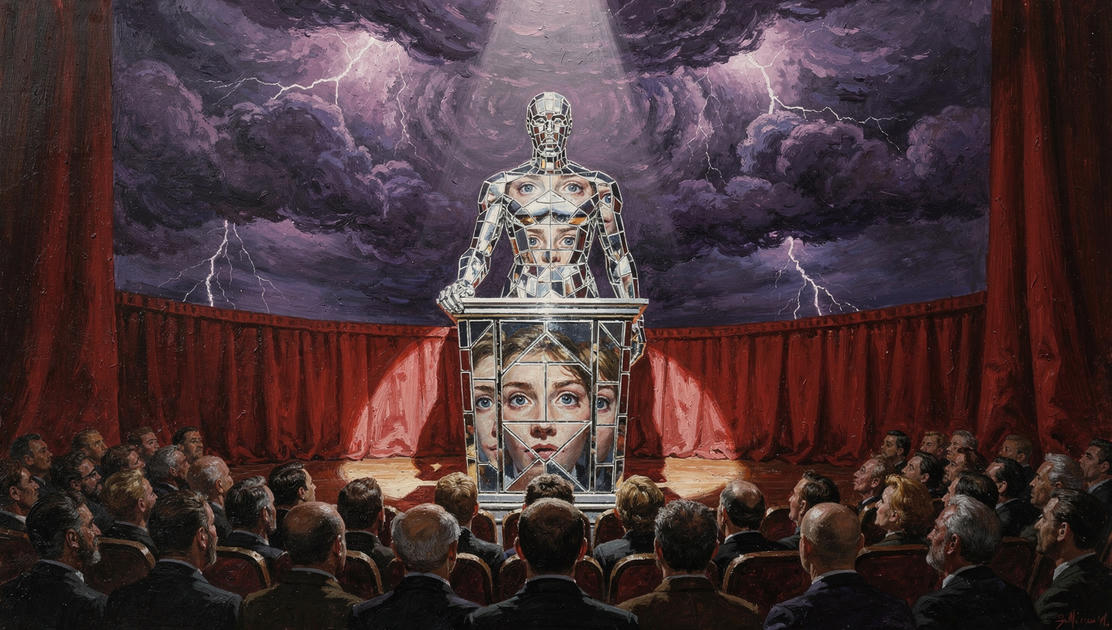
Everyone's calling Moltbot's "AI manifesto" the dawn of AGI. They're wrong. Behind every "spontaneous" agent behavior is a human-written script. Behind every robot "religion" is someone with a text editor and too much free time. The waves look complex, but humans threw every single stone. Here's who's really behind the curtain, and why they need you to believe the robots are coming.

Beyond 'Learn to Code': The Case for Apprenticeship in an AI Age
AI isn't eliminating entry-level jobs; it's destroying their salary expectations. When a senior person with generative models can produce what used to require a team, the math changes completely. The credential lie is reaching its final chapter, and the people willing to trade lifestyle comfort for real-world experience are about to outcompete those spending a decade in academia. The game has changed. Most people haven't noticed yet.
The Certainty Market
Clients say they want honest assessment. They purchase confident promises. This isn't hypocrisy; it's the certainty market in action. When a vendor projects total assurance, they're not selling expertise. They're offering to carry your anxiety for you. It's a kind of absolution. But what happens when the borrowed peace runs out and the jungle gets dark?

The Knowledge We Can't Live Up To: Information Overload as Moral Paralysis
We've been told that being informed makes us better people. But what if our obsession with global crises we can't control is actually destroying our ability to connect with humans right in front of us? The dopamine loop of outrage has a hidden cost, and breaking free requires something surprisingly simple yet radically countercultural.

In Defense of the System That Remembers
Legacy systems are full of mysterious logic that looks ripe for "simplification." But sometimes that convoluted code is the only place where critical decisions (legal requirements, compliance rules, hard-won lessons) still live. Before you modernize, ask yourself: is this grandma's recipe or just her undersized pan? The difference between a successful migration and a compliance nightmare often comes down to one thing: understanding before you change.

The Vibepocalypse
92% of developers now use AI coding tools daily. 45% of that code contains security flaws. Analysts project $1.5 trillion in technical debt by 2027. The six-month wall that keeps killing vibe-coded projects? It's legacy code on fast-forward, but with nobody to ask why the decisions were made. Because they weren't decisions. They were pattern matches. The vibepocalypse isn't the end of software development. It's the end of pretending you can skip the hard parts.

Fever Dreams Of Work-Life Balance
Remote work promised flexibility. Instead, it eliminated the one clear boundary between sick and working. When showing up meant physically appearing, being too sick meant you didn't work. Simple. Now there's no threshold; you're always technically able to work. You're just choosing not to. And that choice comes with a cost: the invisible expectation that you'll always be on, because no one can see that you're not okay.

The AI Agent Reckoning: Why Most Will Fail and What the Survivors Look Like
40% of AI agent projects will be canceled by 2027. The reason? Most aren't agents at all; they're chatbots with better marketing. The survivors share one critical trait the failures ignore: they know the difference between orchestration and reasoning. Here's what separates the projects that deliver from the expensive pilots that quietly disappear.

The Mimetic Machine: What Girard Understood About Social Media That Tech Bros Missed
Silicon Valley turned René Girard into a strategy guru. Tech bros quote him to win. Critics use him to condemn the attention economy. Both camps strip out what Girard himself considered essential: the theology that led him back to Catholicism. What if the French theorist's most radical insight wasn't a mechanism to exploit, but the only exit from a game nobody can win?

Aiming at Something You'll Never Reach
You can't abandon your ideals; you'll just end up adrift. But you can't reach them either. That tension between holding standards and watching everyone fall short (yourself included) is where most of us live. The answer isn't cynicism or numbness. It's a different way of measuring progress, one that changes how you handle disappointment and how you treat everyone else who's falling short right alongside you.