Blog
Thoughts on Christian Voluntarism, technology, and personal growth

The Skill Shift: What Enterprise Developers Need to Learn Now
The ability to write code from memory is becoming less valuable by the month. What's not automated is looking at a business problem and framing it correctly, pushing back when a product owner hands you a solution disguised as a requirement. The premium is shifting from "can you implement this algorithm" to "can you define the right problem and communicate effectively while you build it?"

Why I Still Code as an Architect
Architecture without code is like navigation without ever looking at a map. You can talk about destinations all day, but eventually someone has to figure out which roads actually exist. I recently discovered a popular ORM was fighting me at every turn, friction that documentation never warned about. If I hadn't been hands-on, I never would have known. The moment you stop coding, you become the guy throwing out ideas that don't connect to anything real.

Humility in the Age of AI Gurus and Hot Takes
Everyone's predicting AI will revolutionize everything, or destroy it. Meanwhile, 70% of 2024's AI predictions already aged poorly. Here's what I've learned from telling clients "I don't think AI can do what you want": there's a crucial difference between humility and helplessness. One keeps you learning. The other leaves you paralyzed. In a world of confident hot takes, maybe honest uncertainty is the real competitive edge.

Attention as a Spiritual Discipline in the Digital Age
Two weeks off. One 700-page book I'd been wanting to read for years. I finished 40 pages. The rest? Scrolling. Shorts. Fragments of nothing. The desert monks called this acedia, not laziness, but a restless inability to stay present. They stared out windows hoping for interruption. We have something worse: an algorithm that learns exactly what captures us, not what deserves us.

The Long Way Home
My mom's final wish was for me to return to church. I sat at her funeral annoyed, not at the wish, but at feeling lectured while grieving. The path back to faith isn't a dramatic altar call. It's years of wrong turns, a girlfriend who left when things got hard, and thoughts that couldn't have come from me alone. The question isn't whether you'll be disappointed by the church. You will be. The question is what you do next.

Providence and Planning: Holding Plans Loosely
After 18 months of grinding, I finally had everything lined up: a real technology partnership, a team under our control, the sweet spot we'd been working toward. Then one month in, it all fell apart. The client chased an AI initiative, and our budget got slashed. I wish I could say I took it well. I didn't. But what happened next taught me something crucial about the difference between holding on and holding on loosely.

Single Parenting and Software Development: Making It Work
Three kids. A demanding architect role. No partner to hand off to when both worlds collide. There's no playbook for single parenting while building software. But after years of figuring it out, I've learned the difference between explanations and excuses, why physical setup matters more than you'd think, and what to do when a five-year-old interrupts mid-code. It's not elegant. It's not optimized. But most days, it works.
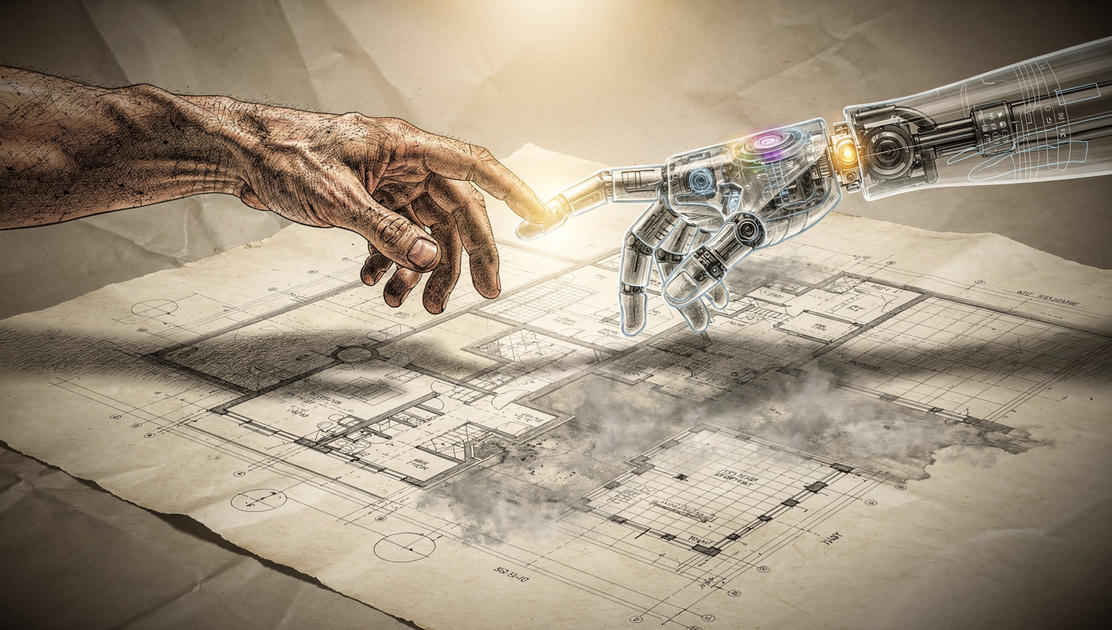
The Human in the Loop Isn't Overhead
A new study claims experienced developers are 19% slower with AI tools, while believing they're faster. Here's why that finding is both true and completely misleading. After years of working with LLMs, I've learned the difference between automation and augmentation isn't just semantic; it's the key to everything. The human in the loop isn't overhead. It's the only thing catching inevitable failures.

Lessons From Seven Years of Enterprise Consulting
Seven years ago, I thought technical work was the job and everything else was overhead. I was wrong. The political stuff, the relationship management, the endless meetings about buy-in: that *is* the work. And with AI making implementation faster than ever, this ratio has shifted dramatically. The building isn't hard anymore. Figuring out what to build, and getting everyone aligned on building it? That's where the real work lives.

Prompt Engineering Is Just Communication (And That's the Point)
Prompt engineering isn't dying; it's just communication by another name. The same skills that help you explain complex ideas to colleagues work with LLMs: resolving ambiguity, providing context, validating understanding. The difference? No body language, no facial expressions. Just text. So the text becomes everything. And if you can't push back when a model confidently gives you the wrong answer, you're not using the tool; it's using you.